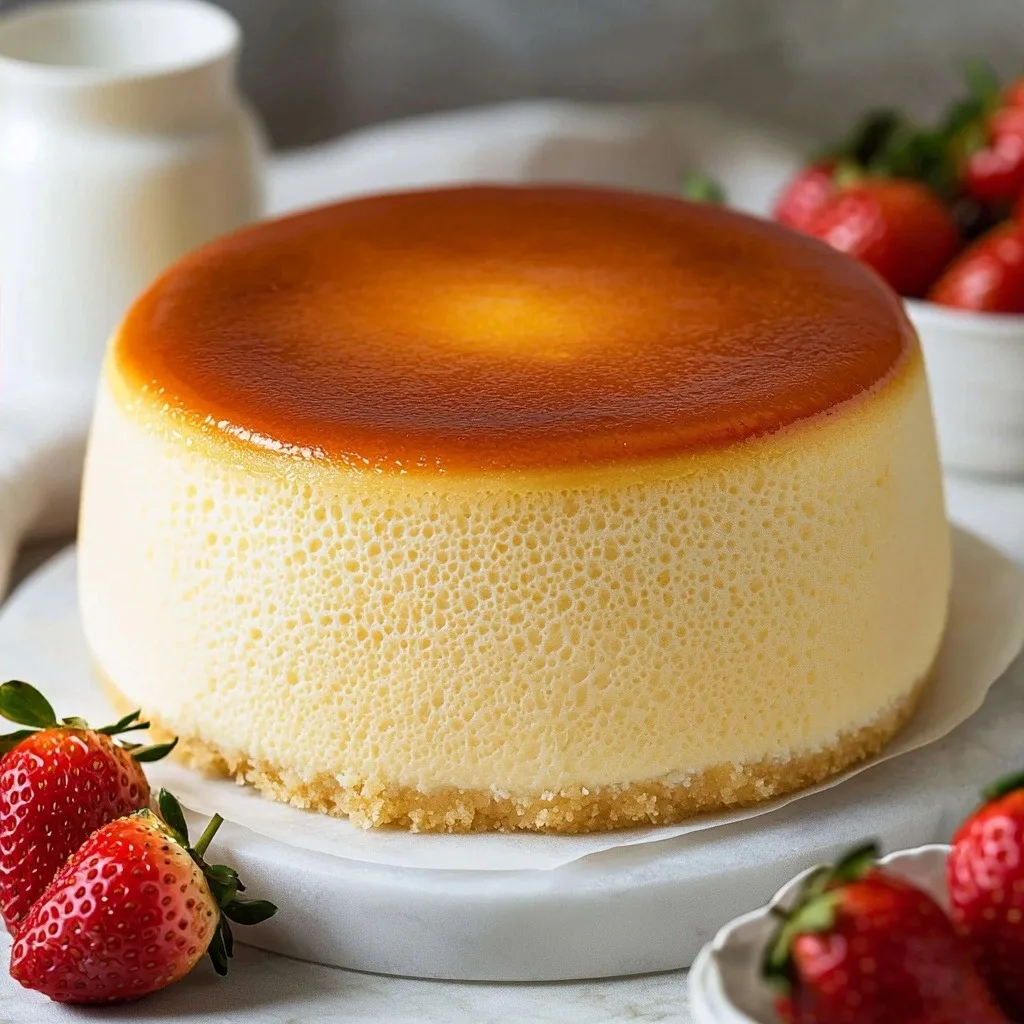
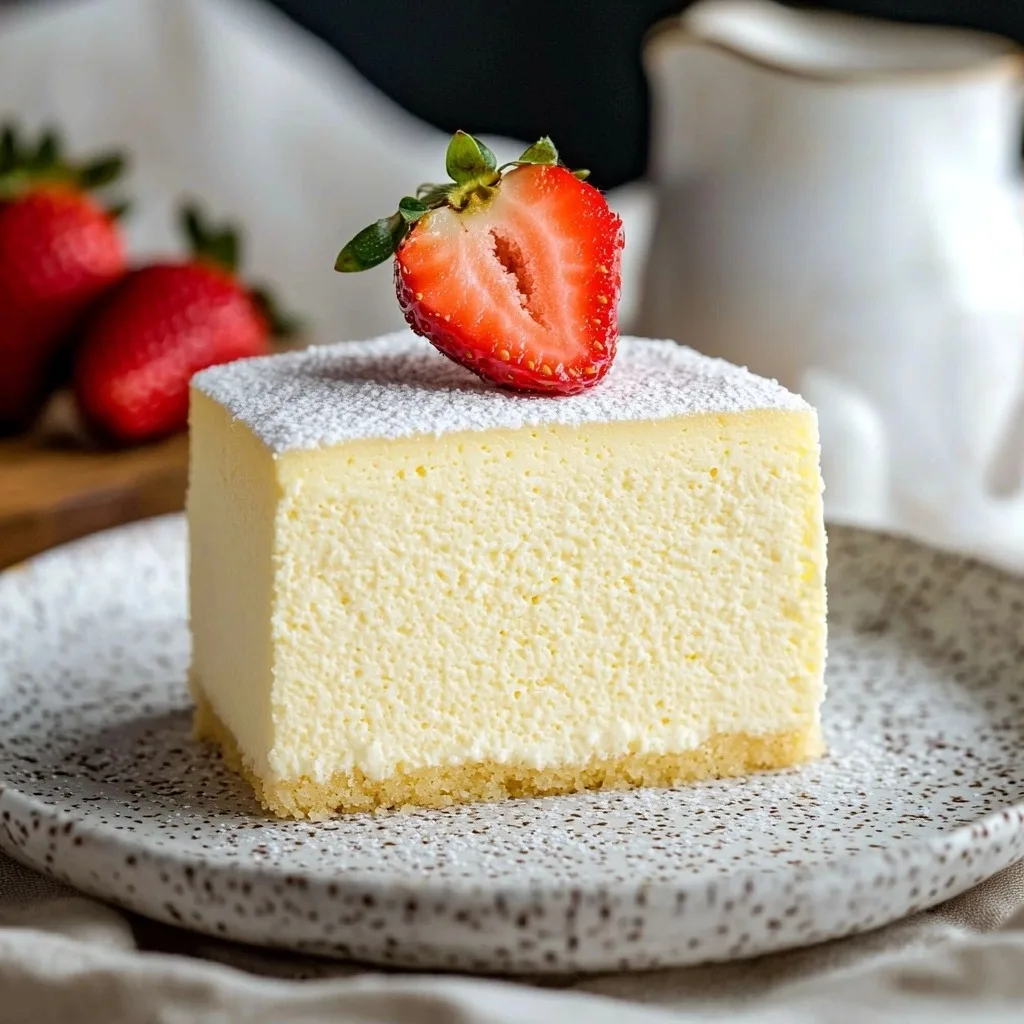
There’s something truly magical about a dessert that feels like a cloud, and for me, that’s always been Japanese Cotton Cheesecake. I remember the first time I tried it, I was completely blown away by its delicate texture and subtle sweetness. It’s not like your typical dense, rich cheesecake; this one is light, airy, and practically melts in your mouth. Making it at home has become a little ritual, a way to bring a bit of that subtle elegance into my kitchen. It’s the perfect treat when you want something special, but not overly heavy, and it always puts a smile on everyone’s face.
Why You’ll Love This Japanese Cotton Cheesecake
- It’s incredibly light and airy, like eating a sweet cloud!
- The flavor is subtly sweet and perfectly balanced – not too rich.
- It’s a showstopper dessert that looks impressive but is totally doable.
- Perfect for any occasion, from a casual brunch to a fancy dinner party.
Ingredients You’ll Need
- Cake Flour: This is key for that super soft, tender crumb. Don’t swap it for all-purpose flour if you can help it!
- Cornstarch: Works with the cake flour to give the cheesecake its delicate structure and melt-in-your-mouth texture.
- Cream Cheese (full fat brick): Use the block kind, not the spreadable tub. It gives the best structure and creamy flavor.
- Unsalted Butter (room temperature): Room temp butter emulsifies better, leading to a smoother batter.
- Milk (full fat): Adds richness and moisture. Full-fat is best for this recipe.
- Large Egg Yolks (room temperature): Provide richness, color, and help with emulsification. Room temperature eggs mix more evenly.
- Vanilla Extract: Just a touch enhances all the other flavors.
- Large Egg Whites (room temperature): These are whipped into a meringue, which is where all that amazing “cotton” texture comes from. Room temperature whites whip up best!
- Granulated Sugar: Sweetens the cheesecake and stabilizes the meringue.
- Lemon Juice: A little bit helps stabilize the egg whites for a stronger, more stable meringue.
How to Make Japanese Cotton Cheesecake Step by Step
First things first, you’ll want to get your oven and pan ready. Preheat your oven to 300°F and line a 6-inch round baking pan with parchment paper on the bottom and sides. This makes sure your beautiful cheesecake won’t stick! Then, we’ll start melting our cream cheese, butter, and milk together over a double boiler. Just fill a small saucepan with a little water, bring it to a boil, and set a heatproof bowl on top with your ingredients. Whisk them until they’re smooth and reach about 130°F (55°C). This gentle heat ensures everything combines beautifully without curdling.
Once that creamy mixture is ready, take it off the heat and whisk in your egg yolks and vanilla extract until everything is perfectly combined. Now for the dry ingredients! Sift in your cake flour and cornstarch. Sifting is super important here to prevent lumps and keep things light. Whisk until it’s smooth, and then, for extra insurance, pour the whole batter through a fine-mesh sieve. Trust me, this extra step makes a huge difference in getting that silky-smooth texture we’re after!
This is where the magic happens – the meringue! In a separate, very clean bowl, beat your room temperature egg whites and lemon juice on high until they’re white and frothy. Then, slowly add your granulated sugar in three batches, continuing to beat until you reach medium-soft peaks. This means when you lift the mixer, the peaks will gently fold over like soft-serve ice cream. Finally, turn the mixer to low for about 30 seconds to get rid of any large air bubbles. Now, gently fold about a third of your gorgeous meringue into the cream cheese batter until it’s smooth, then carefully pour that mixture into the remaining meringue. Fold it all together with a rubber spatula until just combined. Don’t overmix, or you’ll lose all that precious air!
My Top Tips for Success
- I always make sure my eggs are at room temperature. It really helps the yolks incorporate smoothly and the whites whip up perfectly.
- Trust me on this one: don’t skip sifting the dry ingredients and then straining the batter. It’s the secret to that unbelievably smooth texture.
- When making the meringue, keep an eye out for medium-soft peaks. That’s the sweet spot for a light and stable cheesecake.
- I find that folding the batter gently is crucial. Overmixing can deflate the air and make your cheesecake denser.
- Pay attention to the baking temperatures and times carefully. The gradual temperature changes prevent cracking and ensure a perfectly cooked center.
- I always leave the cheesecake in the oven with the door cracked to cool gradually. This prevents a sudden temperature shock and helps prevent shrinking.
Common Mistakes to Avoid
- Overmixing the batter: This can deflate the air incorporated by the meringue, leading to a denser cheesecake. Gently fold until just combined.
- Opening the oven door too early: A sudden blast of cold air can cause the cheesecake to sink or crack. Resist the urge to peek!
- Not using a water bath: The water bath provides a moist environment, preventing cracks and ensuring even cooking. Without it, your cheesecake is likely to dry out and crack.
- Removing the cheesecake from the oven too quickly: This can cause a dramatic temperature shock, leading to significant shrinking and cracking. Always cool it gradually in the oven as instructed.
- Using cold egg whites: Cold egg whites won’t whip up to their full volume, resulting in a less airy meringue and a denser cake.
How to Store Japanese Cotton Cheesecake
- Countertop: Not recommended due to its dairy content.
- Refrigerator: Up to 3-4 days in an airtight container.
- Freezer: Up to 1 month, wrapped tightly in plastic wrap and then foil. Thaw overnight in the refrigerator.
Frequently Asked Questions
What makes this cheesecake “cotton”?
The “cotton” texture comes from the unique method of combining a rich cream cheese base with a light, airy meringue. This creates a cake that is incredibly delicate, spongy, and melts in your mouth, unlike traditional dense cheesecakes.
Can I use a different size pan?
This recipe is specifically developed for a 6-inch round pan. Using a different size would alter the baking time and potentially the texture. If you must use a different size, you’ll need to adjust baking times and possibly ingredient quantities.
Why did my cheesecake crack?
Cheesecakes often crack due to sudden temperature changes, overbaking, or not using a water bath. Following the gradual cooling process and baking in a water bath as instructed will help prevent cracking.
How do I know when the cheesecake is done?
The cheesecake is done when the top is golden brown and a toothpick inserted into the center comes out mostly clean. It will still have a slight jiggle in the center, which is normal for this type of delicate cake.
Can I make this ahead of time?
Absolutely! Japanese Cotton Cheesecake actually tastes even better the next day after it’s had time to chill and for the flavors to fully meld. Store it in an airtight container in the refrigerator.
I hope you try this Japanese Cotton Cheesecake! It’s such a lovely dessert, and making it is a truly rewarding experience. Let me know how it turns out for you – I can’t wait to hear about your baking adventures!
PrintJapanese Cotton Cheesecake
A light, fluffy, and incredibly delicate cheesecake that melts in your mouth, perfect for any special occasion.
- Prep Time: 30
- Cook Time: 75
- Total Time: 105
- Yield: 8 servings
- Category: Dessert
- Method: Baking
- Cuisine: Japanese
- Diet: Vegetarian
Ingredients
- ¼ cup (30 g) cake flour
- 2 tablespoon (20 g) cornstarch
- ¾ cup (180 g) cream cheese full fat brick
- 2 tablespoon (30 g) unsalted butter room temperature
- 3 ½ tablespoon (50 g) milk full fat
- 3 large egg yolks room temperature
- ½ teaspoon (2 g) vanilla extract
- 3 large egg whites room temperature
- ⅓ cup (70 g) granulated sugar
- ½ teaspoon (2 g) lemon juice
- powdered sugar garnish
Instructions
- Preheat your oven to 300°F (150°C).
- Line the bottom and sides of a 6-inch round baking pan with parchment paper.
- Fill a small saucepan halfway with water and bring it to a boil to create a double boiler.
- In a mixing bowl that fits over the saucepan, add the cream cheese, butter, and milk.
- Whisk the ingredients until the butter and cream cheese are completely melted and combined, reaching approximately 130°F (55°C).
- Remove the cream cheese bowl from the heat.
- Whisk in the egg yolks until fully combined.
- Whisk in the vanilla extract until fully combined.
- Using a fine mesh sieve, sift the cake flour into the cream cheese mixture.
- Sift the cornstarch into the cream cheese mixture.
- Whisk the batter until it is smooth and lump-free.
- Pour the batter through a fine mesh sieve into another bowl to ensure it is completely smooth.
- In a large, clean mixing bowl, add the egg whites.
- Add the lemon juice to the egg whites.
- Using an electric hand mixer, beat the egg whites on high speed until they become white and frothy.
- Slowly pour in ⅓ of the granulated sugar while the mixer is running.
- Continue mixing and slowly add the remaining sugar in two more batches.
- Beat the meringue until it reaches medium-soft peaks; the peaks should fold over slowly like soft-serve ice cream when the mixer is lifted.
- Turn the mixer to low speed and mix the meringue for an additional 30 seconds to remove any large air bubbles.
- Take ⅓ of the prepared meringue and gently fold it into the egg batter until it is completely combined and smooth.
- Carefully pour the egg batter mixture into the remaining meringue.
- Gently fold the batter with a rubber spatula until just combined, being careful not to over-mix or deflate the air.
- Pour the batter into the lined 6-inch baking pan from about 5 inches above the pan to help release any remaining large air bubbles.
- Place the cheesecake pan into a larger, deep baking tray.
- Fill the larger baking tray with about 1-2 cm of hot boiling water to create a water bath.
- Bake in the preheated oven at 300°F (150°C) for 30 minutes.
- After 30 minutes, lower the oven temperature to 230°F (110°C).
- Bake for an additional 30 minutes at the lower temperature.
- Increase the oven temperature to 275°F (135°C).
- Bake for another 13-15 minutes, watching closely to prevent cracking. If cracks appear, slightly crack the oven door for about 5 seconds to release steam.
- The cake is done when the top is golden and a toothpick inserted into the center comes out mostly clean.
- Turn off the oven once baking is complete.
- Leave the cake in the oven with the door slightly cracked for 15 minutes.
- Remove the water bath from the oven.
- Leave the cake in the oven for another 15 minutes to cool further.
- Remove the cake from the tin.
- Place the cake on a wire rack to cool completely at room temperature.
- Sift powdered sugar on top of the cooled cheesecake before serving.
Notes
Ensure all cold ingredients like eggs and cream cheese are at room temperature for best results.
Do not overmix the batter once the meringue is folded in; gentle hands are key!
The water bath is essential for a moist, crack-free cheesecake.
Allow the cheesecake to cool gradually in the oven to prevent shrinking and cracking.