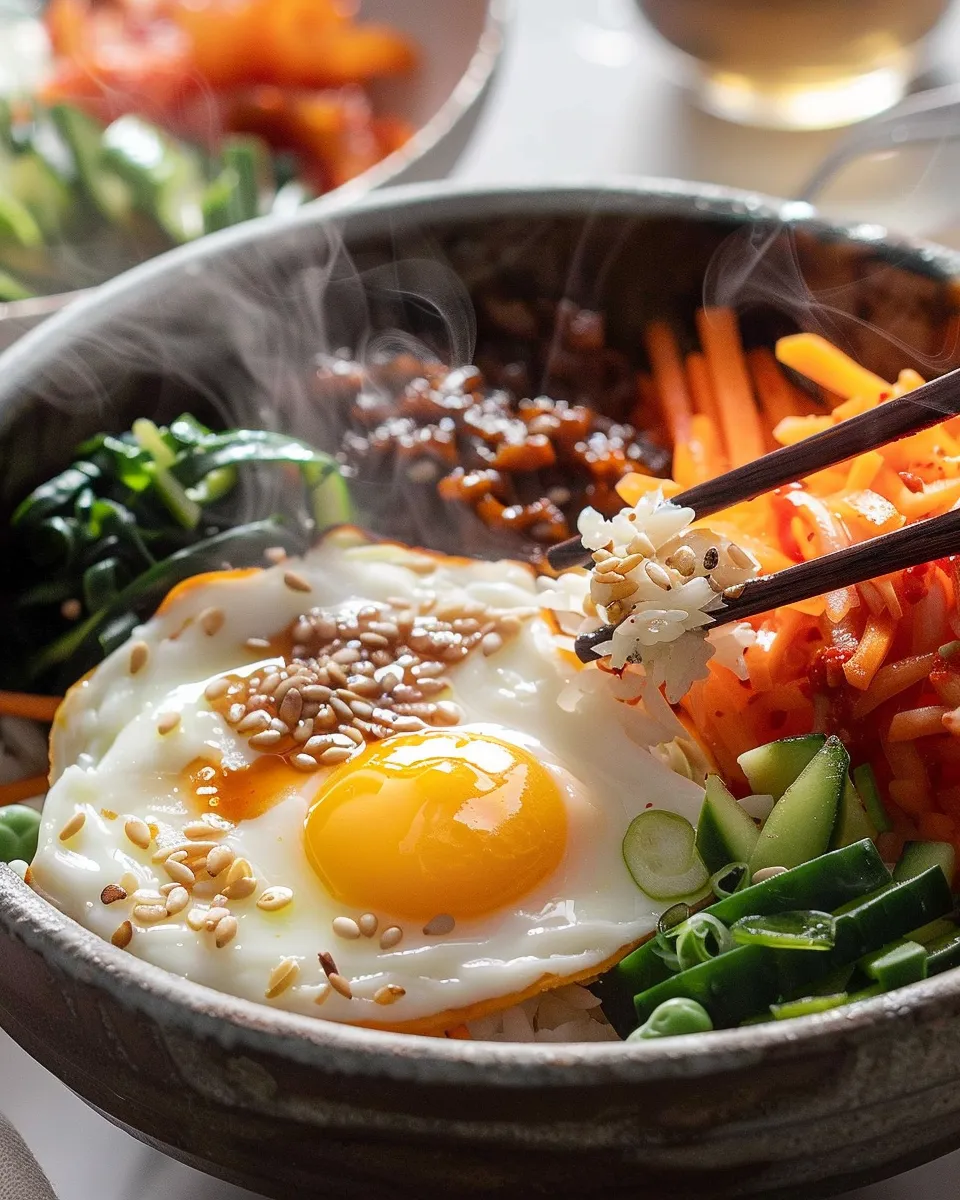
Craving a flavor explosion that’s both healthy and incredibly satisfying? These Korean Veggie Bibimbap Bowls are your answer! Imagine a vibrant tapestry of colorful vegetables, perfectly cooked rice, and a spicy-sweet Gochujang sauce that ties it all together. This isn’t just a meal; it’s an experience, a journey for your taste buds that will leave you feeling energized and happy. As the days get longer and warmer, there’s nothing quite like a fresh, vibrant bowl of bibimbap. It’s a perfect way to celebrate the season’s bounty while enjoying a nutritious and delicious meal.
Bibimbap, meaning “mixed rice,” has been a staple in Korean cuisine for centuries. My grandmother used to make it every spring, using the first harvest of seasonal vegetables from her garden. She taught me that the key to a great bibimbap lies in the balance of flavors and textures. From the crunchy carrots to the savory mushrooms, each component plays a vital role. With this recipe, I’m sharing my modernized take on this classic dish, making it accessible and adaptable for any home cook. It’s a dish that can be customized to your liking, allowing you to experiment with different vegetables and protein sources. Get ready to discover your new favorite way to enjoy a rainbow of flavors in one bowl!
INGREDIENTS
- Cooked Rice: The foundation of our bibimbap. Use short-grain rice like sushi rice or medium-grain rice. The slightly sticky texture helps the ingredients adhere together. Day-old rice works best, as it tends to be less sticky when reheated.
- Spinach: Packed with vitamins and minerals, spinach provides a slightly bitter counterpoint to the other sweeter vegetables. You can substitute with other leafy greens like kale or Swiss chard. Sautéing the spinach helps reduce its volume and enhances its flavor.
- Carrots: Adds a vibrant crunch and sweetness. Julienned carrots are ideal, but you can also use shredded carrots for convenience. Carrots are an excellent source of beta-carotene, which converts to vitamin A in the body.
- Cucumber: Provides a refreshing coolness and crispness. English cucumbers are preferred due to their thin skin and fewer seeds.
- Mushrooms: Adds an umami richness. Shiitake, cremini, or oyster mushrooms all work well. Sautéing the mushrooms with a touch of soy sauce and garlic enhances their savory flavor. Mushrooms are a good source of B vitamins and antioxidants.
- Bean Sprouts: Offers a satisfying crunch and freshness. Look for fresh, plump bean sprouts without any signs of wilting or browning. Bean sprouts are a low-calorie source of fiber and vitamin C.
- Gochujang Sauce: The heart and soul of bibimbap! This Korean chili paste adds a spicy, savory, and slightly sweet flavor. You can adjust the amount to your spice preference. If you’re sensitive to spice, start with a small amount and add more to taste. Gochujang is fermented, so it contains beneficial probiotics.
- Sesame Oil: Adds a nutty aroma and flavor. Toasted sesame oil is preferred for its more intense flavor.
- Soy Sauce: Provides a savory umami base. Use low-sodium soy sauce to control the saltiness.
- Garlic: Adds a pungent flavor that complements the other ingredients. Freshly minced garlic is preferred.
- Sugar: Balances the spice of the Gochujang and adds a touch of sweetness. Brown sugar or honey can be used as substitutes.
- Eggs (optional): A fried egg is a classic bibimbap topping, adding richness and protein. Sunny-side up or over-easy eggs are ideal, allowing the yolk to run and coat the other ingredients.
- Sesame Seeds (optional): Adds a nutty flavor and visual appeal. Toasted sesame seeds are preferred.
EXPERT TIPS
Here are some tips I’ve learned from years of making bibimbap:
- Don’t overcrowd the pan when sautéing vegetables. Overcrowding will steam the vegetables instead of browning them, resulting in a less flavorful dish. Work in batches if necessary.
- Taste as you go! Adjust the amount of Gochujang, soy sauce, and sugar in the sauce to your liking. The perfect bibimbap is all about balancing the flavors to your personal preference.
- Use high-quality sesame oil. The flavor of sesame oil is crucial to the overall taste of bibimbap, so it’s worth investing in a good quality brand.
- Make it your own! Bibimbap is a very forgiving dish. Feel free to experiment with different vegetables, protein sources, and toppings.
- Prepare components in advance. The vegetables can be prepared a day ahead, making assembly quick and easy.
FAQ
Can I make bibimbap ahead of time?
Yes, you can prepare the vegetables and sauce ahead of time and store them separately in the refrigerator. Assemble the bibimbap just before serving to prevent the rice from becoming soggy.
Can I use different vegetables?
Absolutely! Feel free to substitute with your favorite vegetables. Some other great options include zucchini, bell peppers, eggplant, and mushrooms.
Is bibimbap spicy?
Bibimbap can be as spicy as you like! The spiciness comes from the Gochujang sauce, so you can adjust the amount to your preference. If you’re sensitive to spice, start with a small amount and add more to taste.
Can I make bibimbap vegetarian or vegan?
Yes! This recipe is already vegetarian-friendly. To make it vegan, simply omit the egg or substitute it with tofu.
What kind of rice should I use?
Short-grain rice like sushi rice or medium-grain rice is best for bibimbap. These types of rice have a slightly sticky texture that helps the ingredients adhere together.
How long does bibimbap last in the fridge?
Assembled bibimbap is best enjoyed immediately. However, leftovers can be stored in the refrigerator for up to 2 days. Keep in mind that the rice may become slightly dry over time.
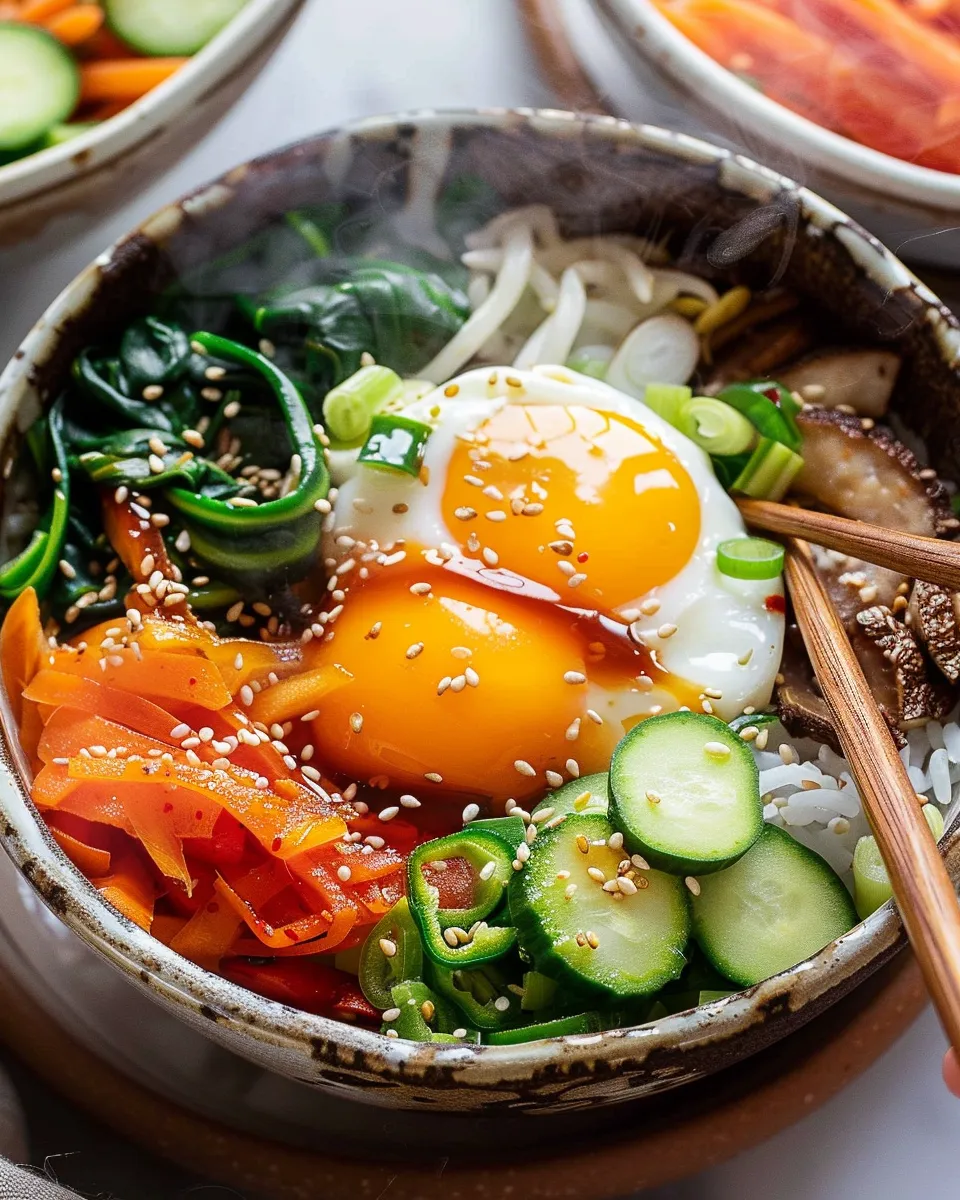
Congratulations! You’ve just unlocked the secrets to creating your own incredible Korean Veggie Bibimbap Bowls. With its vibrant flavors, satisfying textures, and endless customization options, this dish is sure to become a new favorite in your household. Don’t be afraid to experiment with different ingredients and toppings to create your own unique version. Share your bibimbap creations with me on social media – I can’t wait to see what you come up with!
If you enjoyed this recipe, be sure to check out my other Asian-inspired dishes, such as my Spicy Sesame Noodles, Vegetable Spring Rolls, and Tofu Stir-Fry. Happy cooking!
`
Korean Bibimbap Bowls Recipe
Korean Veggie Bibimbap Bowls Simple delicious bowls packed with flavor and fresh veggies Make it tonight
- Prep Time: 20 minutes
- Cook Time: 25 minutes
- Total Time: 45 minutes
- Yield: 4 servings
- Category: Main Course
- Cuisine: Korean
Ingredients
- Cooked Rice
- Spinach
- Carrots
- Cucumber
- Mushrooms
- Bean Sprouts
- Gochujang Sauce
- Sesame Oil
- Soy Sauce
- Garlic
- Sugar
- Eggs (optional)
- Sesame Seeds (optional)
Instructions
- Prepare all the vegetables separately (sauté, julienne, etc.).
- Cook the rice according to package instructions.
- Make the Gochujang sauce by mixing Gochujang paste, sesame oil, soy sauce, garlic, and sugar.
- Assemble the bibimbap bowls by placing rice at the bottom, then arranging the vegetables artfully on top.
- Top with a fried egg (optional) and sesame seeds.
- Drizzle generously with Gochujang sauce and mix well before eating.
Notes
Craving a flavor explosion that’s both healthy and incredibly satisfying? These Korean Veggie Bibimbap Bowls are your answer! A vibrant tapestry of colorful vegetables, perfectly cooked rice, and a spicy-sweet Gochujang sauce ties it all together.