The holidays are here, and that means it’s time for show-stopping centerpieces! Nothing impresses quite like a perfectly cooked, tender, and juicy prime rib. This easy slow roasted prime rib recipe is your secret weapon to achieving culinary glory without the stress. Imagine the aroma filling your home, the delighted faces around the table, and the satisfaction of serving a truly unforgettable meal. Forget intimidating techniques – this recipe breaks down the process into simple, manageable steps, ensuring a foolproof result every time. Whether you’re a seasoned chef or a holiday cooking newbie, this guide is designed to help you create a prime rib that will be the talk of the season. Get ready to become the roast master!
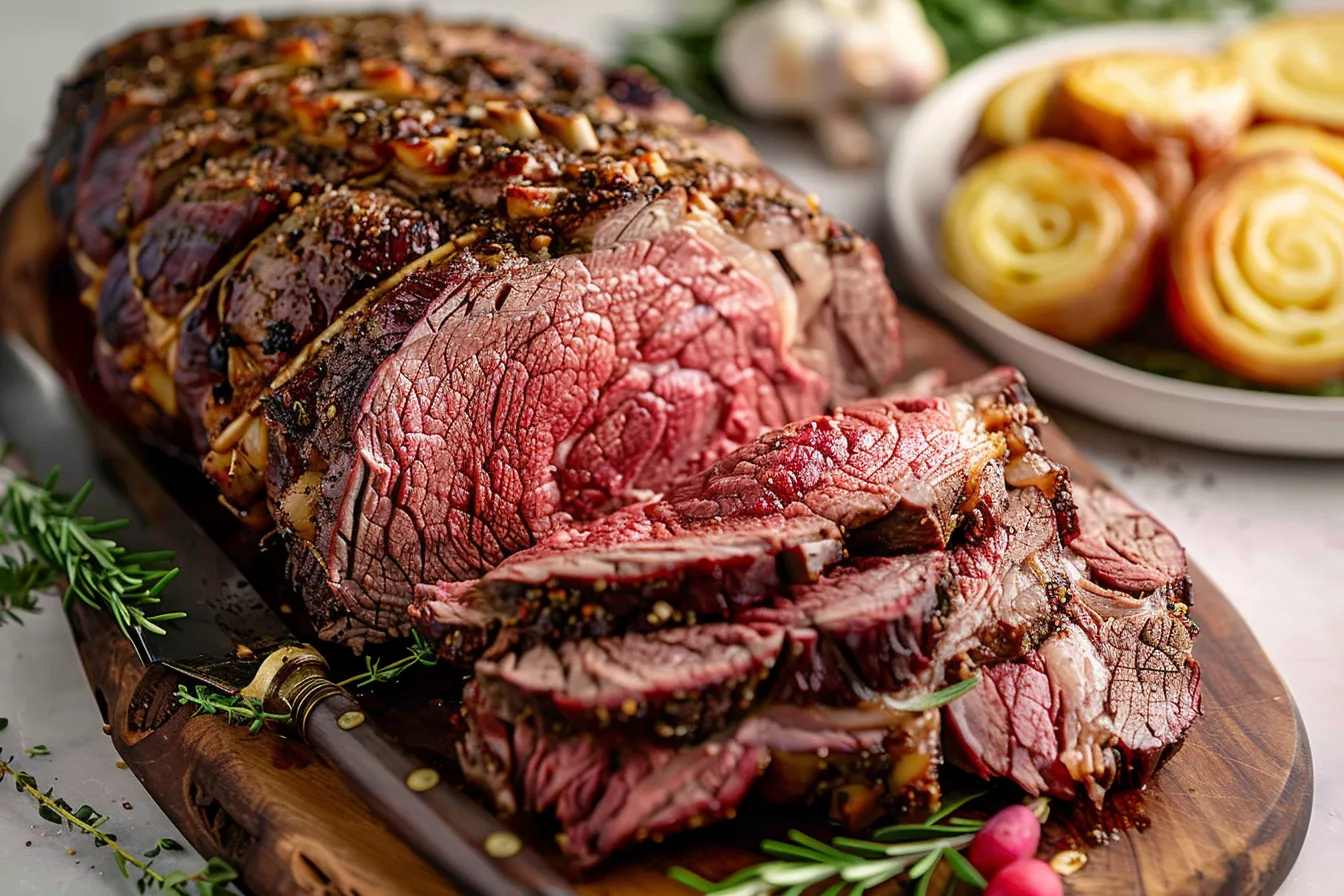
As a professionally trained chef with years of experience roasting everything from chickens to whole hogs, I’ve learned a thing or two about achieving the perfect roast. The key? Low and slow cooking. This method gently coaxes out the natural flavors of the beef, resulting in unparalleled tenderness. Plus, the slow roast technique is very forgiving, making it ideal for busy holiday schedules. With a few simple ingredients and a little patience, you’ll be on your way to prime rib perfection!
Ingredients for the Perfect Prime Rib
Let’s gather our ingredients! Quality is key when it comes to prime rib, so choose the best cut you can afford. We’ll also need some flavorful aromatics to infuse the roast with deliciousness.
- Prime Rib Roast (Standing Rib Roast): Choose a roast with good marbling (those beautiful streaks of fat). This fat renders during cooking, creating incredible flavor and moisture. A 4-bone roast (about 8-10 pounds) will feed 8-10 people.
- Kosher Salt: Essential for seasoning the roast and creating a delicious crust. Kosher salt’s larger crystals adhere well to the meat and draw out moisture, resulting in a better sear.
- Black Pepper: Freshly ground black pepper adds a pungent bite.
- Garlic: Fresh garlic cloves, minced or smashed, provide a savory depth of flavor. Garlic contains allicin, a compound that releases its characteristic aroma when crushed or chopped, enhancing its flavor-boosting properties.
- Fresh Rosemary: Rosemary’s piney aroma complements the richness of the beef beautifully.
- Fresh Thyme: Thyme adds an earthy, subtle complexity.
- Olive Oil: A binder for the spices and herbs, also helps with browning.
- Beef Broth (Optional): For making a pan sauce or au jus.
Ingredient Substitutions:
- No Fresh Herbs? Substitute dried herbs, using about 1 teaspoon of dried for every tablespoon of fresh.
- Garlic Powder: If you don’t have fresh garlic, use 1-2 teaspoons of garlic powder.
- Different Roast? This method works well for other large cuts of beef like a ribeye roast or sirloin tip roast. Adjust cooking times accordingly.
Expert Tips for Slow Roasted Prime Rib Perfection
Here are a few tricks I’ve learned over the years to elevate your prime rib game:
- Dry Brining is Key: Salting the roast a day or two in advance (dry brining) allows the salt to penetrate deep into the meat, seasoning it from the inside out and resulting in a more tender and flavorful roast.
- Use a Meat Thermometer: Don’t rely on timing alone! A reliable meat thermometer is essential for achieving your desired level of doneness. Insert the thermometer into the thickest part of the roast, away from any bones.
- Let it Rest: Allowing the roast to rest after cooking is crucial. This allows the juices to redistribute throughout the meat, resulting in a more tender and juicy roast.
- Don’t Overcrowd the Pan: Make sure there’s plenty of space around the roast for air to circulate, promoting even cooking and browning.
- Embrace the Searing Process: Searing the prime rib gives it a beautiful, flavorful crust. Don’t skip this step!
Storage & Substitutions
Got leftovers? Here’s how to store them, plus some ideas for creative substitutions.
Storage
- Refrigerator: Store leftover prime rib in an airtight container in the refrigerator for up to 3-4 days.
- Freezer: For longer storage, wrap the prime rib tightly in plastic wrap and then in foil, and freeze for up to 2-3 months. Thaw overnight in the refrigerator before reheating.
Reheating Tips:
- Oven: Reheat the prime rib in a low oven (250°F) with a little beef broth to prevent it from drying out.
- Slices: For individual slices, you can gently reheat them in a skillet with a little butter or olive oil.
Serving Suggestions: Serve with classic sides like mashed potatoes, roasted vegetables, Yorkshire pudding, and horseradish sauce.
FAQ: Your Prime Rib Questions Answered
Let’s tackle some common questions about making prime rib:
What temperature should I cook my prime rib to?
The internal temperature depends on your desired level of doneness. Here’s a guide:
- Rare: 120-130°F
- Medium-Rare: 130-140°F
- Medium: 140-150°F
- Medium-Well: 150-160°F
- Well-Done: 160°F+ (not recommended)
Remember that the internal temperature will continue to rise slightly (5-10°F) as the roast rests.
How long does it take to cook a prime rib?
Cooking time depends on the size of the roast and your oven temperature. As a general rule, slow roasting at 250-275°F will take approximately 3-4 hours for a 4-bone roast. Always use a meat thermometer to ensure accurate doneness.
Do I need to sear the prime rib before or after roasting?
Searing after roasting is my preferred method. This creates a beautifully browned crust without overcooking the inside of the roast. Plus, the oven’s already hot, and you can move the roast from oven to cutting board to searing station without much cooling.
Can I cook a prime rib from frozen?
While it’s not ideal, you can cook a prime rib from frozen. However, it will require significantly longer cooking time. For best results, thaw the roast completely in the refrigerator before cooking.
What’s the best way to make a pan sauce from the drippings?
After roasting the prime rib, pour off the excess fat from the roasting pan. Place the pan on the stovetop over medium heat. Add beef broth and scrape up any browned bits from the bottom of the pan. Simmer until the sauce has thickened slightly. Season with salt and pepper to taste. You can also add a splash of red wine or balsamic vinegar for extra flavor.
Why is my prime rib tough?
A tough prime rib is usually the result of overcooking or not allowing it to rest properly. Be sure to use a meat thermometer to monitor the internal temperature and let the roast rest for at least 30 minutes before slicing.
Can I use a different cut of beef for this recipe?
Yes, while prime rib (standing rib roast) is the classic choice, you can also use a ribeye roast or sirloin tip roast. Adjust cooking times accordingly.

Your Holiday Prime Rib Awaits!
You’ve got this! With this easy slow roasted prime rib recipe, you’re well on your way to creating a holiday feast that will impress your family and friends. Remember to choose a quality roast, season it generously, use a meat thermometer, and let it rest. And don’t forget the sides! Now, go forth and roast!
Did you try this recipe? Leave a comment below and let me know how it turned out! Share your photos on social media and tag me! Happy roasting!
PrintSlow Roasted Prime Rib Recipe

Easy Slow Roasted Prime Rib Achieve juicy perfection with minimal effort Get the recipe try it today
- Prep Time: 30 minutes
- Cook Time: 3 hours
- Total Time: 3 hours 30 minutes
- Yield: 8-10 servings
- Category: Main Course
- Cuisine: American
Ingredients
- Prime Rib Roast (Standing Rib Roast): 8-10 pounds
- Kosher Salt
- Black Pepper
- Garlic
- Fresh Rosemary
- Fresh Thyme
- Olive Oil
- Beef Broth (Optional)
Instructions
- Salt the roast a day or two in advance (dry brining).
- Preheat oven to 250-275°F.
- Combine olive oil, minced garlic, rosemary, thyme, salt, and pepper. Rub all over the prime rib roast.
- Place the prime rib in a roasting pan.
- Roast for approximately 3-4 hours, or until a meat thermometer inserted into the thickest part of the roast reads your desired level of doneness (see temperature guide in FAQ).
- Sear the prime rib in a hot skillet on all sides to create a crust.
- Let the roast rest for at least 30 minutes before slicing.
- Slice and serve.
Notes
This easy slow roasted prime rib recipe is your secret weapon to achieving culinary glory without the stress. A foolproof guide for a tender and juicy prime rib, perfect for the holidays.