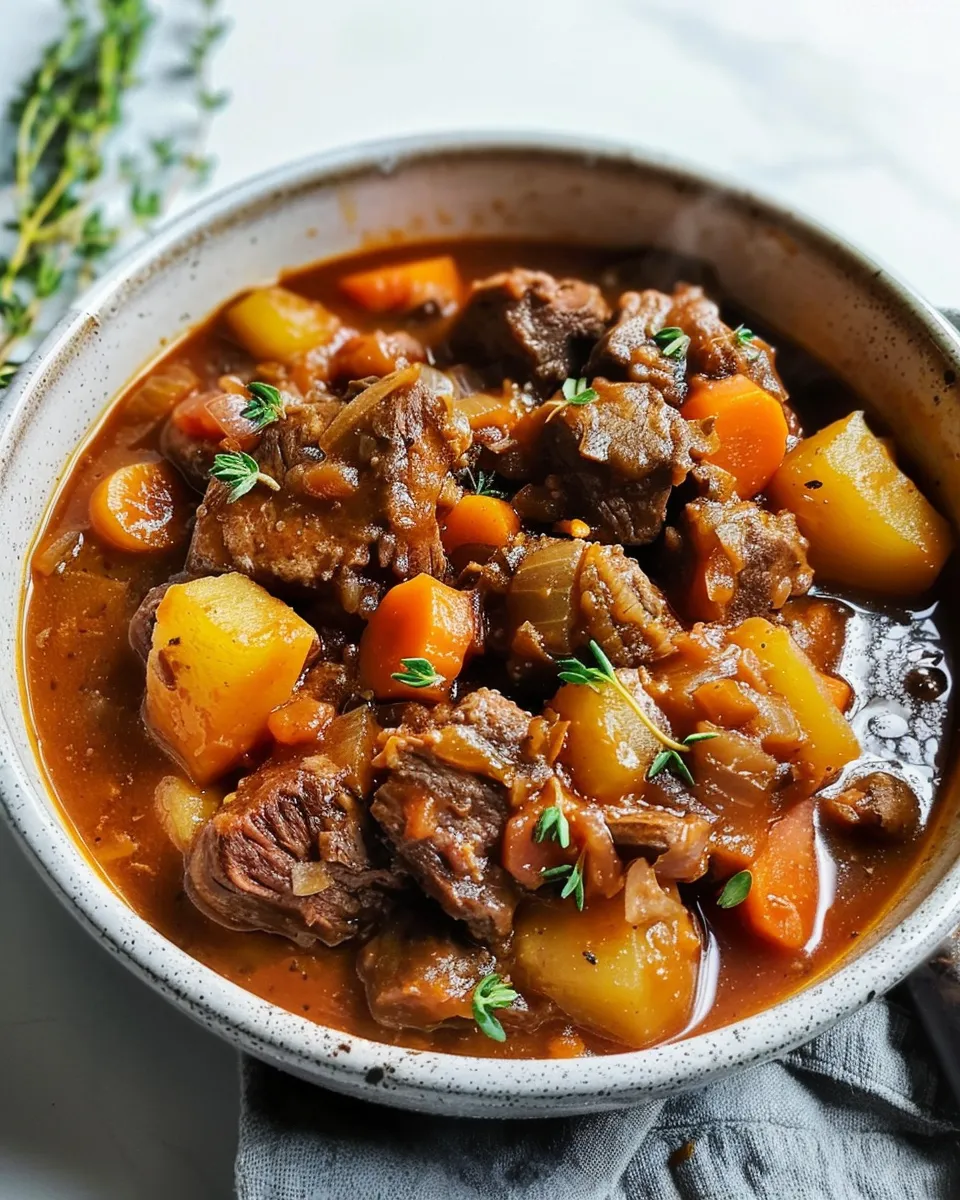
As the leaves turn golden and the air grows crisp, there’s nothing quite as comforting as a warm bowl of hearty beef stew. This Autumn Harvest Beef Stew isn’t just any stew; it’s a celebration of the season’s best flavors. Packed with tender beef, sweet root vegetables, and fragrant herbs, this recipe is a guaranteed crowd-pleaser. I’ve been perfecting this recipe for years, ever since my grandmother showed me her secret ingredient – a splash of apple cider vinegar to brighten the flavors. I’ve tested this recipe countless times, tweaking it until it was absolutely perfect. Trust me, this is one stew you’ll want to make again and again. This particular version is incredibly popular right now, tapping into the trend of using seasonal, locally sourced ingredients. And the best part? It’s incredibly easy to make, perfect for a cozy weeknight dinner.

Why This Autumn Harvest Beef Stew is Special
What sets this beef stew apart from the rest? It’s all about the combination of high-quality ingredients, careful cooking techniques, and a touch of autumnal magic. The key is to build layers of flavor, starting with a rich, deeply browned beef base and adding sweetness from roasted root vegetables. The addition of fresh herbs and a hint of spice elevates the stew, creating a symphony of flavors that will warm you from the inside out. Let’s explore what makes each element so important.
The Importance of Quality Beef
The foundation of any great beef stew is, of course, the beef. Choosing the right cut and preparing it properly is crucial. I prefer using chuck roast, as it’s a tougher cut that becomes incredibly tender and flavorful when slow-cooked. Look for well-marbled pieces, as the fat will render down and add richness to the stew. Cut the beef into 1-inch cubes and be sure to generously season them with salt and pepper before browning. Don’t overcrowd the pan when browning the beef; work in batches to ensure each piece develops a beautiful, deep crust. This step is essential for building that rich, savory base for the stew. The first time I made this, I rushed the browning process and the stew lacked depth of flavor. Lesson learned!
Selecting the Perfect Autumn Vegetables
This stew is all about showcasing the best of autumn’s bounty. Root vegetables like carrots, parsnips, and sweet potatoes add sweetness, while onions and celery provide a savory base. I also love adding a touch of butternut squash for its creamy texture and subtle sweetness. Roasting the vegetables before adding them to the stew intensifies their flavors and adds a caramelized touch. This extra step is worth the effort and truly elevates the final dish.
A Guide to Seasonal Produce
When choosing your vegetables, opt for seasonal, locally sourced produce whenever possible. Look for firm, vibrant carrots, parsnips, and sweet potatoes. Butternut squash should feel heavy for its size and have a deep orange color. If you can find them at your local farmers market, even better! Seasonal produce is not only fresher and more flavorful but also supports local farmers and reduces your environmental impact. It’s a win-win!
Mastering the Art of Stewing
The key to a truly great beef stew is the slow and low cooking process. Stewing allows the flavors to meld together and the beef to become incredibly tender. Whether you choose to simmer the stew on the stovetop, in the oven, or in a slow cooker, the goal is to maintain a gentle, consistent heat. Avoid boiling the stew, as this can toughen the beef. I prefer simmering on the stovetop, as it allows me to monitor the stew and adjust the heat as needed.
Stovetop, Oven, or Slow Cooker?
Each cooking method has its advantages. Stovetop simmering allows for the most control over the heat, while oven stewing provides a more even and consistent temperature. Slow cookers are perfect for busy weeknights, as you can simply set it and forget it. If using a slow cooker, be sure to brown the beef and roast the vegetables beforehand to maximize flavor. No matter which method you choose, be patient and allow the stew to simmer for at least 2-3 hours, or until the beef is fork-tender. My grandmother always said, “The longer it simmers, the better it tastes!”
Building Layers of Flavor
Beyond the beef and vegetables, the flavor of this stew comes from a combination of aromatic herbs, spices, and liquids. Fresh thyme, rosemary, and bay leaves add a fragrant, earthy note, while a pinch of smoked paprika provides a subtle smoky depth. Beef broth forms the base of the stew, and a splash of red wine adds richness and complexity. And don’t forget my grandmother’s secret ingredient: a splash of apple cider vinegar to brighten the flavors and balance the richness of the stew. I often add a tablespoon or two of Worcestershire sauce for an extra umami kick.
Spice it Up: Exploring Flavor Enhancers
Feel free to experiment with different herbs and spices to customize the stew to your liking. A pinch of red pepper flakes can add a touch of heat, while a teaspoon of Dijon mustard can add a tangy depth. For a richer, more decadent flavor, try adding a dollop of crème fraîche or sour cream at the end. Remember to taste as you go and adjust the seasonings accordingly. Cooking is all about experimentation and finding what flavors you love!
Thickening and Finishing Touches
Once the beef is tender and the flavors have melded, it’s time to thicken the stew and add any finishing touches. A simple cornstarch slurry (cornstarch mixed with cold water) is an easy way to thicken the stew to your desired consistency. Simply whisk the slurry into the simmering stew and cook until thickened. Alternatively, you can mash some of the cooked potatoes with a fork and stir them back into the stew for a naturally thickened and creamy texture.
The Final Flourish: Garnishes and Serving Suggestions
Before serving, garnish the stew with a sprinkle of fresh parsley or thyme. A dollop of sour cream or crème fraîche adds a touch of richness, and a side of crusty bread is perfect for soaking up all the delicious juices. This Autumn Harvest Beef Stew is a complete meal in itself, but it also pairs well with a simple green salad or roasted vegetables. Serve it hot and enjoy the cozy warmth of autumn in every bite.
Expert Tips for the Best Autumn Harvest Beef Stew
- Brown the Beef Properly: Don’t overcrowd the pan when browning the beef. Work in batches to ensure each piece develops a deep, rich crust.
- Roast the Vegetables: Roasting the vegetables before adding them to the stew intensifies their flavors and adds a caramelized touch.
- Simmer Low and Slow: Be patient and allow the stew to simmer for at least 2-3 hours, or until the beef is fork-tender.
- Don’t Skip the Acid: A splash of apple cider vinegar or red wine vinegar brightens the flavors and balances the richness of the stew.
- Taste as You Go: Adjust the seasonings to your liking and don’t be afraid to experiment with different herbs and spices.
- Make it Ahead: This stew tastes even better the next day, as the flavors have more time to meld together.
- Freeze for Later: Leftover stew can be frozen for up to 3 months. Thaw overnight in the refrigerator and reheat gently on the stovetop.
FAQ: Your Questions About Autumn Harvest Beef Stew Answered
Can I make this stew in a slow cooker?
Yes, you can! Brown the beef and roast the vegetables as directed in the recipe. Then, transfer everything to a slow cooker, add the remaining ingredients, and cook on low for 6-8 hours or on high for 3-4 hours, or until the beef is fork-tender.
What if I don’t have apple cider vinegar?
If you don’t have apple cider vinegar, you can substitute it with red wine vinegar or balsamic vinegar. Start with a smaller amount and add more to taste.
Can I use different vegetables?
Absolutely! Feel free to use any root vegetables you enjoy, such as turnips, rutabagas, or celery root. You can also add other vegetables like mushrooms or kale.
How do I thicken the stew without cornstarch?
If you prefer not to use cornstarch, you can mash some of the cooked potatoes with a fork and stir them back into the stew for a naturally thickened and creamy texture. Alternatively, you can use a roux (equal parts butter and flour) to thicken the stew.
Can I make this stew vegetarian?
Yes, you can easily adapt this recipe to be vegetarian. Simply substitute the beef with hearty mushrooms or lentils. Use vegetable broth instead of beef broth and adjust the seasonings accordingly.
Conclusion: Embrace the Flavors of Autumn
This Autumn Harvest Beef Stew is more than just a recipe; it’s a celebration of the season’s best flavors and a reminder of the simple joys of home cooking. With its tender beef, sweet root vegetables, and fragrant herbs, this stew is a guaranteed crowd-pleaser that will warm you from the inside out. I hope you enjoy making and sharing this recipe with your loved ones as much as I do. And if you’re looking for another hearty fall meal, my readers also love this Butternut Squash Risotto! What are your favorite fall comfort foods? Share your thoughts in the comments below!
PrintAutumn Harvest Beef Stew Delicious Comfort Food

Savor delicious comfort food Our Autumn Harvest Beef Stew recipe combines tender beef seasonal veggies A hearty flavorful autumn classic
- Prep Time: 20 minutes
- Cook Time: 3 hours 0 minutes
- Total Time: 3 hours 20 minutes
- Yield: 6 servings
- Category: Stew
- Cuisine: American